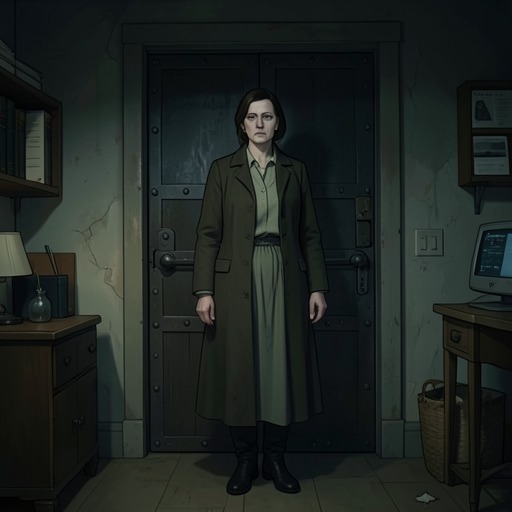
Toru Okada–Kumiko Okada marriage
The Wind-Up Bird ChronicleThe marriage between Toru Okada and Kumiko Okada is shaped by a sharp divide between the bond they maintain and the family histories that repeatedly intrude upon it. Kumiko’s childhood separation from her parents and her estrangement from her brother help explain the isolation surrounding their relationship; later, her disappearance leaves Toru trying to preserve the possibility of reunion without knowing where she is or what she intends.
A Marriage Set Apart from Kumiko’s Family
Toru’s account presents the couple’s marriage against a family background in which blood ties do not guarantee closeness. Kumiko and her brother, Noboru Wataya, were nine years apart in age, and she had spent several years living with her grandmother in Niigata. The distance between the siblings, and Kumiko’s marked unease whenever her brother was discussed, contrasted with Toru’s unambiguously negative feelings toward him. Kumiko understood Toru’s hostility and considered it reasonable; she herself was far from fond of her brother.
Toru’s violent break with Kumiko’s father ended his contact with her family. He told Kumiko that she could visit her parents without him, but she made no attempt to do so. The rupture thus became more than a conflict between son-in-law and father-in-law: it coincided with Kumiko’s own distance from her family, leaving the marriage with few ordinary family connections to rely on.
The Childhood History Behind Kumiko’s Distance
Kumiko was sent from Tokyo to live with her grandmother in Niigata when she was three. Her parents explained the move as a response to her supposedly delicate health, but Kumiko did not believe this account. She remembered no serious illness and had heard that the decision was connected to a long-running feud between her mother and grandmother. In that version, sending Kumiko away served as a compromise between the older women, and the child functioned as a kind of hostage in their dispute.
After returning to her parents’ home, Kumiko struggled to feel that she belonged there. Her sister was the person who patiently cared for her and helped her begin to trust the household. The sister’s death from food poisoning the year after Kumiko returned removed that support. Kumiko later connected the loss to her own guilt and sense of inadequacy, recalling that her family compared her unfavorably with the dead girl and expected her to take piano lessons at the piano her sister had played. The novel supplies this history through Toru’s account of what Kumiko told him; it establishes the depth of her isolation without reducing the marriage to a simple explanation of it.
Separation and Toru’s Effort to Preserve the Bond
After Kumiko disappears, Toru continues to define his purpose as saving her and bringing her back. When he explains this to Nutmeg Akasaka, he cannot give the place from which Kumiko needs rescuing a name; he can only describe it as somewhere far away. The exchange makes the separation both concrete and difficult to locate: Toru is committed to finding his wife, but he cannot describe the terms or geography of her absence.
Kumiko’s absence enters the household materially as well. Toru’s clothing fills the closet space that had held her skirts and dresses, which he folds, packs with mothballs, and stores rather than discards. The gesture records a changed domestic life while preserving room for her return. His effort to bring her back is not merely a stated hope; it shapes how he treats the objects and space left behind.
Contact Through Ushikawa and an Unsettled Future
A later visit from Ushikawa gives Toru information about Kumiko’s circumstances. Ushikawa shows him a key with Kumiko’s distinctive green leather key holder and insists that she gave it to him rather than having it stolen from her. He says that he knows where she is and is helping her with errands because she cannot go outside. The encounter confirms contact with Kumiko’s world, but it does not reunite the couple or make her accessible to Toru.
Ushikawa also conveys that Noboru Wataya no longer insists on divorce and would accept the possibility that Toru and Kumiko might resume their former relationship if both wanted it. He adds that Kumiko herself has no such intention at that moment, while offering to act as a conduit for communication. The offer creates a narrow channel between the separated spouses, but its terms remain controlled by Kumiko’s present wishes and her brother’s intervention; Toru is not promised reconciliation.
Kinship, Agency, and the Marriage’s Unresolved State
The marriage is caught between formal kinship and actual access. Kumiko is Toru’s wife, Noboru’s sister, and someone whom Ushikawa says cannot go outside; each relationship produces a different kind of claim or restriction. Toru’s resolve to recover her persists, yet the information he receives emphasizes that wanting the marriage to resume cannot substitute for Kumiko’s own decision.
That unresolved distinction becomes stark in Kumiko’s final message to Toru. She says she intends to kill Noboru by disconnecting his life-support system, then surrender to the police and remain silent rather than offer an explanation or defense. The decision places her in direct conflict with her brother and makes clear that she is acting on her own judgment, even as it threatens to extend the separation from Toru. The evidence leaves the marriage’s future open: the possibility of renewed relations is mentioned, but no reunion or settled outcome is established.